
Scania's Rugao plant set to roll out first vehicles in Q4
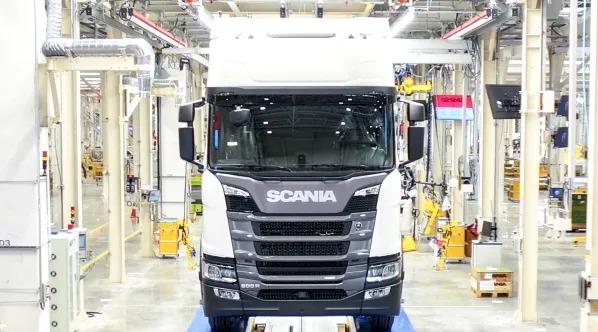
Scania is a major Swedish commercial vehicle manufacturer. [Photo/WeChat account: rugaofabu]
Scania, a major Swedish commercial vehicle manufacturer founded 134 years ago, is preparing to roll out its first vehicles from its new plant in Rugao Economic and Technological Development Zone in the fourth quarter of this year.
The Rugao facility marks Scania's third industrial production base worldwide and represents its largest overseas investment in nearly seven decades.
"The removal of foreign ownership caps in China's commercial vehicle sector in 2020 opened the door to a new market," said Amanda Liu, director of communication for Scania Industrial Operations Asia. Scania quickly finalized its decision to establish the Rugao plant, becoming one of the first companies to benefit from the new policy.
Government efficiency played a key role in accelerating the project. From land acquisition to project approval, processes were notably faster compared to other countries. In late 2021, the company's project capable of producing 50,000 commercial vehicles passed approval.
Policy incentives also bolstered Scania's confidence. When importing equipment for its powertrain project in 2023, the company benefited from preferential policies for foreign R&D centers, including exemptions on import duties and VAT for equipment, as well as VAT rebates for domestic purchases. "These incentives allow us to reinvest more into technology R&D," Liu noted.
To support construction, Rugao established a dedicated task force led by senior municipal officials. Instead of waiting for the entire complex to be completed, each individual building was approved as it was finished, cutting inspection time from 15 days to just three. Digital services further reduced red tape: when registering its R&D center, Scania completed the entire process online without needing a single in-person visit.
To date, Scania has secured 40 first-tier suppliers in Jiangsu, with annual supporting contracts sometimes exceeding 1 billion yuan ($139.25 million). Nearly 10 suppliers from outside Jiangsu and abroad have also invested or are planning to build new facilities in Jiangsu. "Our goal is to achieve over 85 percent localization of parts," Liu explained. Localized supply chains are expected to cut costs, shorten delivery cycles, and boost overall competitiveness.

