
Environmental protection efforts pay off in Hai'an
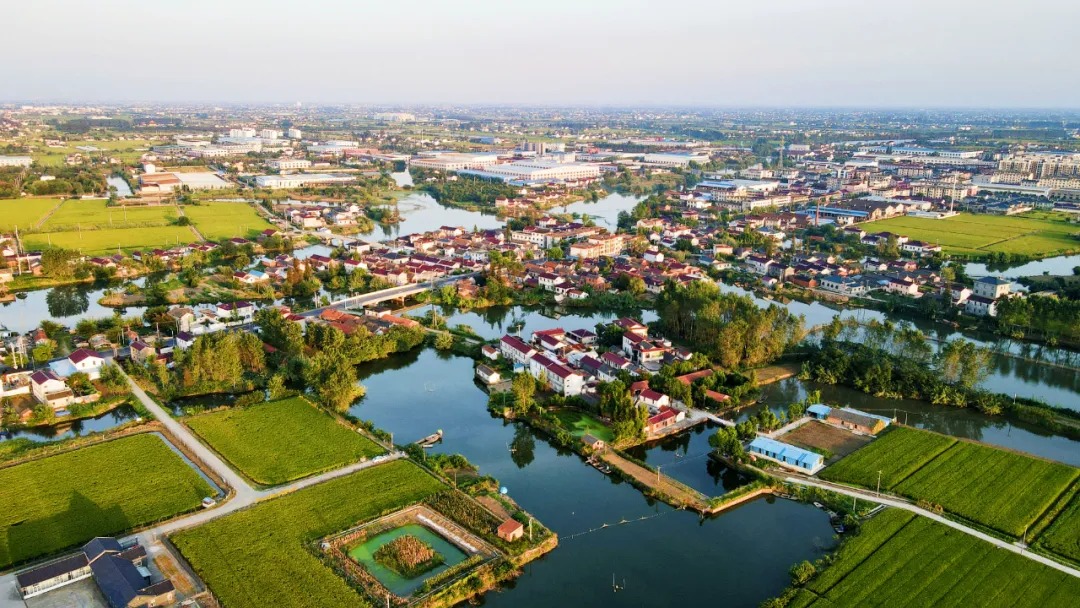
An aerial view of Hai'an, Nantong. [Photo/WeChat account: hafbwx]
From ecological restoration to pollution control, Hai'an has spent years forging a path that priorities the environment, and the results are now clearly visible.
In 2024, the city's average PM2.5 concentration dropped to 31.8 micrograms per cubic meter, while the proportion of days with good air quality rose to 84.4 percent. All 15 key monitored water sections met required standards, and both key construction land and contaminated farmland maintained a 100 percent safe utilization rate.
In the first half of the year, Hai'an rolled out 43 projects under its ozone control campaign, retired 263 diesel trucks, and advanced the construction of fully electric concrete mixing stations to drive greener industrial transformation.
Meticulous governance also paid off in water-related efforts: 98.2 percent of sewage outlets in the Huaihe River basin were remediated, 34 key water pollution prevention projects were implemented, and wastewater treatment plant upgrades added 44,000 metric tons of daily processing capacity.
The ecological payoff is visible. More rare bird species are stopping in the city rather than just passing through. Surveys in 2024 recorded 6,802 birds across 108 species, including 16 new additions compared to previous rounds of monitoring. Among them were four species classified as nationally protected.
Industrial transformation has also taken root. As electrical equipment emerges as one of Hai'an's key industrial chains, the city has tackled the environmental risks of electroplating head-on. Hai'an has introduced a centralized surface treatment center in the Electronics Information Industrial Park. With a wastewater treatment capacity of 5,000 tons per day, the center adopts a specialized collection and unified treatment model, enabling companies to operate with plug-and-play convenience — shortening production cycles and reducing pollution-control costs.

