
Cured meat, a must-have for diners in Nantong on Chinese New Year
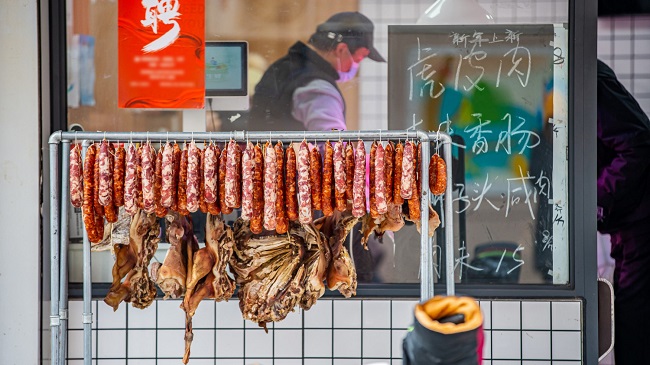
Chinese sausages are cured and dried. [Photo provided to en.nantong.gov.cn]
In Nantong, winter marks the beginning of the curing season, a tradition closely tied to preparations for the Chinese New Year.
As soon as the cold kicks in, families begin making cured foods, and rows of sausages, salted pork, and salted fish can be seen hanging from bamboo poles, becoming a familiar sight in many neighborhoods.
[Video/Nantong International Communication Center]
For locals, these foods are not only winter staples but also symbols that the New Year is approaching.
Making cured sausage is often regarded as the most important seasonal task. Fresh front-leg pork, chosen for its balance of lean meat and fat, is sliced evenly and seasoned according to each family's preferred recipe. Spices such as Sichuan pepper, star anise, and cinnamon are commonly used. The meat is then stuffed into casings and hung to dry. As the sausages gradually turn glossy and firm, they signal both the passage of time and the growing anticipation of reunion meals.
Salted pork and salted duck are also prepared during this period. Pork belly or hind leg meat is rubbed with coarse salt, strung up, and left to air-dry in winter sunlight and cold winds. The same holds true for the duck meat. These cured meats can be steamed or prepared in a variety of dishes, adding a distinctive flavor to everyday meals.
Salted fish, often made from black carp, is another essential part of Nantong's Chinese New Year diet. After cleaning and salting, the fish is dried until its flesh becomes firm yet tender. In Chinese culture, fish represents abundance, and serving cured fish reflects the wish for prosperity and surplus in the coming year.


 TRANSPORTATION
 EDUCATION
 HEALTHCARE
 USEFUL NUMBERS