
Rudong's Yangkou town promotes zero-carbon development
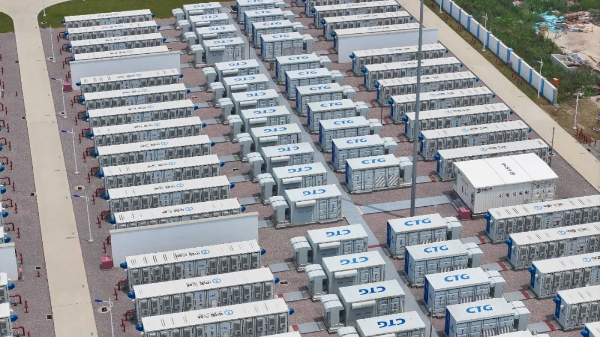
A shared energy storage power station in the zero-carbon industrial park in Yangkou town. [Photo/WeChat account: rudongfb]
The zero-carbon industrial park in Yangkou town, Rudong county, Nantong, Jiangsu province, is accelerating the implementation of four major actions: zero-carbon energy supply, green industrial development, collaborative pollution reduction and carbon reduction, and intelligent operation and management.
As the coastal town with the richest green power resources, the most well-equipped supporting infrastructure, and the most complete power grid structure in Rudong, Yangkou town took the lead in launching the development of a zero-carbon industrial park in Nantong last year.
"The key to the construction is zero carbonization of energy supply. It means replacing thermal power with green electricity and making green energy the main force of energy supply in the park," said Liu Qingjiang, an official from Yangkou town.
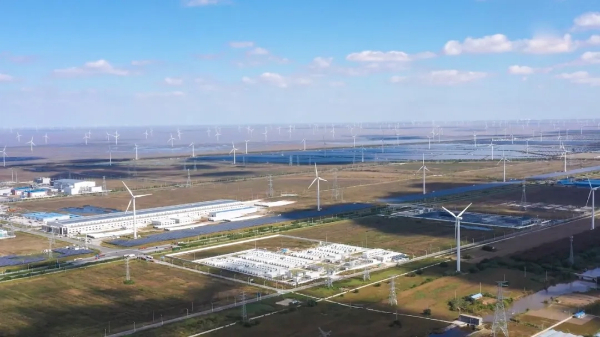
The zero-carbon industrial park in Yangkou town. [Photo/WeChat account: rudongfb]
The specific construction methods include introducing user-side energy storage facilities to balance the instability of green power supply, exploring new models and formats for next-generation green energy such as aggregation services and virtual power plants, and exploring green alternatives for production raw materials for heat and steam-consuming enterprises.
Core enterprises in the town now lead the green wave. At the town's chemical industrial park, BASF Crop Protection (Jiangsu), the Rudong factory of German chemical giant BASF, has taken the lead in building a zero-carbon factory. More than 70 enterprises in the park have completed clean production audits, and three enterprises have built intelligent factories.
A preliminary zero-carbon digital operating system has already been developed in the zero-carbon industrial park, which has access to basic carbon emission data from over 80 enterprises above a designated size, helping refine management of carbon emissions.